
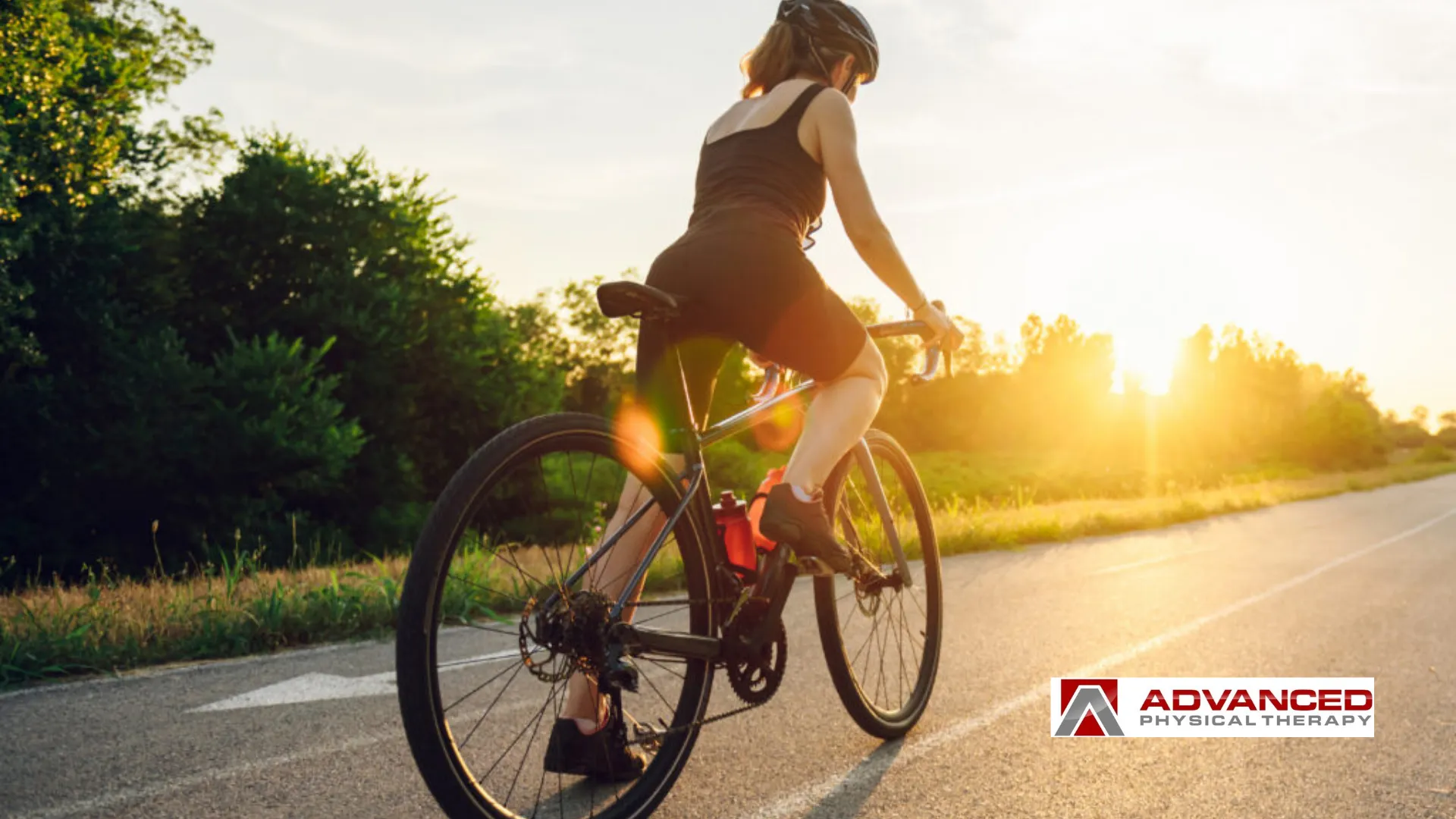
Sports physical therapy in Prairie Creek treats injuries that build up gradually from boating, paddling, trail running, and cycling rather than from a single collision. Prairie Creek sits on the western shore of Beaver Lake, east of downtown Rogers, where activity runs heaviest from spring through early fall. A therapist finds the gap between what a tissue is asked to do and what it has been prepared to do, then closes it. .
What Is Sports Physical Therapy in Prairie Creek?
Sports physical therapy in Prairie Creek is treatment for injuries caused by recreational activity rather than organized competition. The therapist examines strength, mobility, and technique, identifies the overloaded tissue, and builds a loading program that raises capacity. Treatment addresses both the painful area and the weakness elsewhere that caused it.
Key Facts About Sports Physical Therapy in Prairie Creek
- Overuse injuries develop when tissue load exceeds tissue recovery.
- Training volume predicts overuse injury more consistently than intensity does.
- Weekly increases of about 10 percent allow tissue to adapt safely.
- Tendon pain improves with progressive loading, not with rest alone.
- Shoulder pain in paddlers usually traces back to weak scapular control.
- Runners with hip weakness develop knee pain at higher rates.
- Seasonal athletes lose conditioning between activity periods.
- Prior injury raises the risk of injuring the same area again.
Which Activities Cause Injuries Around Beaver Lake?
Prairie Creek sits next to a marina, a park, and miles of shoreline trails, so activity here follows the water and the weather. Wakeboarding and water skiing load the knees and lower back through repeated impact and rotation. Paddling and kayaking produce shoulder and neck pain, especially in people who paddle a few long days rather than many short ones.
Land activity supplies the rest. Trail runners on the rocky routes near Hobbs State Park roll ankles and irritate the Achilles tendon. Cyclists riding the hilly roads east of Rogers develop knee pain and low back stiffness. Boat maintenance and dock work add lifting injuries that peak each spring.
Why Do Overuse Injuries Develop?
Tissue adapts to load when the load rises gradually and recovery time is adequate. Injury appears when either condition fails. A person who paddles once in April and then spends six hours on the water in May has raised load far faster than the rotator cuff can adapt.
University sports medicine guidance points out that training volume should climb by roughly 10 percent per week to let the body adapt to activity, and most recreational injuries trace back to a spike well past that rate.
Weakness elsewhere in the chain compounds the problem. Limited hip mobility pushes rotation into the lower back. Poor scapular control transfers force to the rotator cuff. Treatment corrects the source, not just the symptom.
What Does Treatment Involve?
The examination measures strength, joint mobility, and the specific movement that reproduces pain. Manual therapy and load reduction settle symptoms during the first weeks. Progressive strengthening follows, targeting the deficits found on testing.
The final stage rebuilds tolerance for the activity itself, which means paddling volume, running mileage, or riding time increases on a written schedule rather than by feel.
How Long Does Recovery Take?
Timelines follow tissue biology. Muscle strains heal in two to six weeks depending on severity. Ligament sprains take four to twelve weeks, with ankles at the shorter end. Tendon problems such as Achilles or rotator cuff pain need eight to twelve weeks of consistent loading, since tendon remodels slowly. Bone stress injuries require the longest protection, generally six to twelve weeks before impact resumes.
When Is Evaluation Worthwhile?
Pain that appears earlier in each session, discomfort that lingers into the following day, and swelling after activity all indicate that tissue is not keeping up with the load. Numbness, giving way, or an inability to bear weight call for prompt evaluation. Off-season months are also a practical time to address weaknesses that only surface once activity resumes.
Common Questions From Recreational Athletes
Does treatment mean stopping the activity entirely?
Usually not. Volume drops for a period while strengthening builds capacity, and full activity returns on a graded schedule.
Is physical therapy useful for people who are not competitive athletes?
The mechanics are identical. Recreational bodies face the same loading problems, often with less preparation behind them.
What can prevent the same injury next season?
An off-season strength program aimed at the deficits found during treatment offers the most reliable protection.
How many visits are typical?
Most recreational overuse cases run six to sixteen visits, depending on the tissue involved and the activity being restored.
Where Do Patients Travel From?
The Rogers clinic treats patients throughout eastern Benton County:
- Prairie Creek (72756)
- Rogers
- Avoca
- Garfield
- Lowell
- Pea Ridge
- Bentonville
Before the Next Season Starts
Overuse injuries tend to return in the same month each year unless the underlying capacity changes. Residents interested in sports physical therapy in Prairie Creek can request a no-cost consultation to have the problem assessed, and the Rogers clinic can be reached at (479) 340-1100 for questions about what that visit covers.