
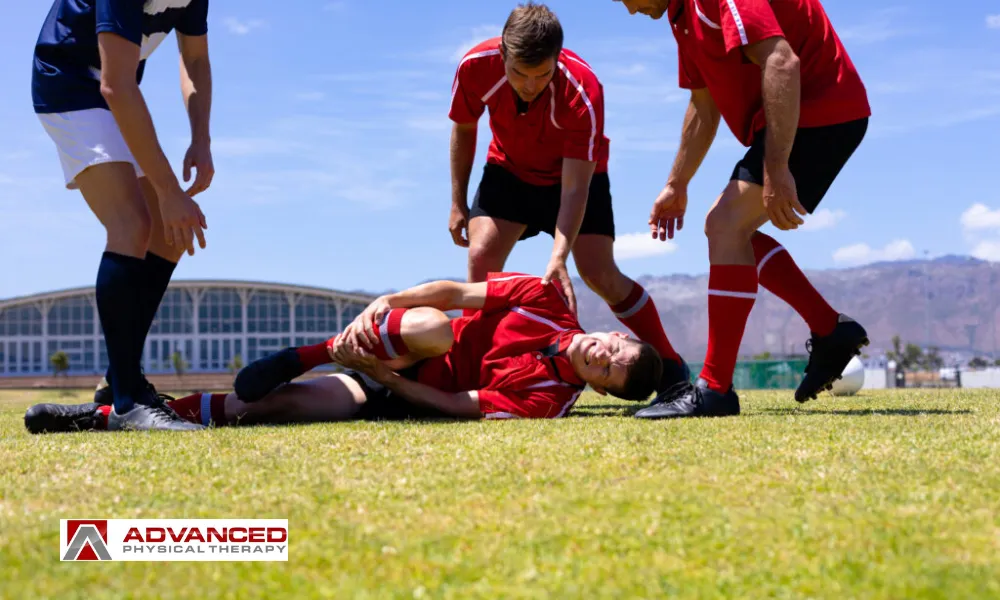
Lowell sits right on the I-49 corridor, which makes it an easy place to live and an awkward place to get hurt. The ball fields, the school schedule and the weekend activity are all local. The clinics that treat a torn ACL properly are a drive away.
It is a 15 minute drive to a clinic whose whole focus is musculoskeletal health. That is worth knowing before you settle for whoever is closest, because sports rehabilitation is the one kind of care where the difference between a good plan and an average one shows up on the field a year later.
Getting Here From Lowell
From the center of Lowell it is 10.8 miles and about 15 minutes:
- Head out on Jackson Street and turn onto East Monroe Avenue.
- Take the on ramp for I-49 north.
- Stay on I-49 for about 7 miles.
- Take the exit and turn onto Southeast 14th Street.
- Southeast 14th becomes West Hudson Road. We are at 2100 W Hudson Rd, Suite 3, with parking at the door.
This is the nearest location to Lowell that treats athletes one-on-one for the full hour. Appointments run on the hour, so a 4pm slot after school gets you back before dinner. Request an appointment on (479) 340-1100 and ask for the first or last slot of the day if you are working around practice.
Sports Injuries We See From the Corridor
The mix is predictable once you know the sports calendar:
- ACL and meniscus injuries from cutting sports, before and after surgery
- Ankle sprains, including the ones that keep recurring because the first was never rehabbed
- Shoulder and elbow pain in throwers and swimmers
- Shin splints and stress-related leg pain in runners
- Patellar and knee pain that flares when the season volume jumps
- Low back pain in lifters and in linemen
- Hamstring and groin strains, and the re-strains that follow a short recovery
- Concussion-related balance and vision problems, alongside the physician managing it
For the full approach by injury type, see our sports injury rehabilitation program.
Return to Sport Is a Test, Not a Date
This is where most athletes get let down, and it is worth being blunt about.
Being cleared at nine months after an ACL reconstruction because nine months have passed is not clearance. It is a calendar. The research on re-injury is fairly consistent that athletes returning without meeting strength and hop-test criteria are at meaningfully higher risk of doing it again, and the second injury is usually worse than the first. The MedlinePlus overview of sports injuries is a reasonable starting point on the general picture.
What clearance should mean is a set of numbers. Quad strength within a defined percentage of the uninjured leg, measured rather than estimated. Single-leg hop distance and control, both legs, compared. The ability to decelerate and change direction under fatigue, because that is when injuries happen, not in the first five minutes. And sport-specific movements performed without the compensation pattern that caused the problem.
We test, we show you the numbers, and we tell you honestly where you are. Athletes chasing more than a return to baseline move on to athletic performance work once rehabilitation is finished.
Overuse Injuries and the School Season
Most of what walks in during a season is not a dramatic injury. It is load. A young athlete goes from an off-season of very little to five practices and two games a week, and tissue that had adapted to nothing is suddenly asked for everything.
That is why shin splints, patellar pain and thrower’s shoulder all cluster in the first few weeks of a season and again right after a tournament stretch. The useful response is rarely total rest, which costs the athlete fitness and their place in the lineup. It is managing load, fixing the mechanics that concentrate stress in one spot, and building strength in the specific tissue taking the beating, so the athlete stays healthy through the back half of a season.
We work around a season rather than ending it where that is clinically reasonable. Where it is not, we say so, and we say why.
What the First Appointment Covers
A full hour, one-on-one with a licensed physical therapist. No handoff to an aide partway through.
We take a history that includes the sport, the position, the training week and what you are trying to get back to. We examine the injured area and the joints above and below it, because a knee problem is frequently a hip problem. We measure strength and range of motion so there is a baseline. Then we tell you what we found, what the plan is, and roughly how many visits it should take.
Most patients in Arkansas can start without a physician referral. Bring any imaging or a surgeon’s protocol if you have one, and we will work inside it.
What Our Physical Therapists Specialize In
Every therapist on staff is a licensed orthopedic specialist, which in practice means the skill set is built around joints, muscle and movement rather than general wellness. That specialty matters for an athlete, because the goal is not simply to restore comfort. It is to restore the specific function the sport demands, then improve on it, then prevent the next injury.
The exercise prescription is where most of that shows up. Each one is chosen from what the examination found, loaded at an intensity the tissue can handle, and advanced on measured progress rather than on a schedule. The underlying science on tendon and ligament healing is reasonably settled; applying it to one athlete’s knee in week six of a season is the part that takes judgment.
An expert eye on technique is the other half of it. Mobility, strength and control get measured at every visit, so the quality of the plan is checkable rather than a matter of opinion. If a number has not moved in three weeks, the plan changes.
Insurance, Referrals and Availability
Three practical things, because they decide whether an athlete actually gets seen.
Insurance. Sports rehabilitation is a covered service under most health plans. Call with your details and our front desk will verify the benefit and tell you what you would owe before the first appointment. No surprises after the fact.
Referrals. Most patients in Arkansas can start without a referral from a doctor or another provider. If a physician is already involved, we coordinate with them rather than working around them, and we will send notes back if you want your family doctor kept in the loop.
Availability. We take new patients across Benton County and the wider northwest Arkansas area, and we hold early and late slots for athletes working around practice. Ask when you call, because those fill first in season.
One more resource worth knowing about: if the condition turns out to be something other than a sports injury, we will say so at the evaluation and talk you through the options nearby rather than starting a plan that will not help.
Frequently Asked Questions
Is sports physical therapy different from regular physical therapy?
The early stages look similar, because healing tissue is healing tissue. The difference is the end of the plan. General rehabilitation finishes when you can manage daily life without pain. Sports rehabilitation keeps going through cutting, landing, sprinting and fatigue, and it finishes with testing rather than with a date.
Can my athlete keep playing while in therapy?
Often, yes, with modified load. It depends entirely on the injury. A manageable overuse problem usually continues with adjustments. A fresh ligament injury or a suspected stress fracture does not, and anyone telling you otherwise before examining the athlete is guessing.
How long does ACL rehabilitation take?
Nine to twelve months to a full return to cutting sports is the realistic range, and the last three months are the part people skip. Earlier milestones come sooner: walking normally, straight-line running, non-contact training. We give you the testing criteria for each stage at the start so you know what you are working toward.
Do you work with a surgeon’s protocol?
Yes, and we follow it. Bring the paperwork from the procedure to the first visit. Where a protocol sets limits, we work inside them and progress you when the tissue allows rather than when the calendar says.
When should an injury be seen rather than waited out?
Get it looked at promptly if there was a pop or a giving-way sensation, if the joint swelled within a few hours, if the athlete cannot put weight on it, if there is numbness or weakness, or if pain has not improved after two weeks of sensible rest. A head injury with confusion, vomiting or worsening headache needs emergency care, not a therapy appointment.
Book From Lowell
Call (479) 340-1100 and we will get the athlete evaluated, give you a straight read on the season, and start treatment the same visit. Sports physical therapy in Lowell is covered from our Rogers clinic, and current hours sit on the clinic’s profile.
Advanced Physical Therapy
2100 W Hudson Rd, Suite 3
Rogers, AR 72756
Phone: (479) 340-1100