
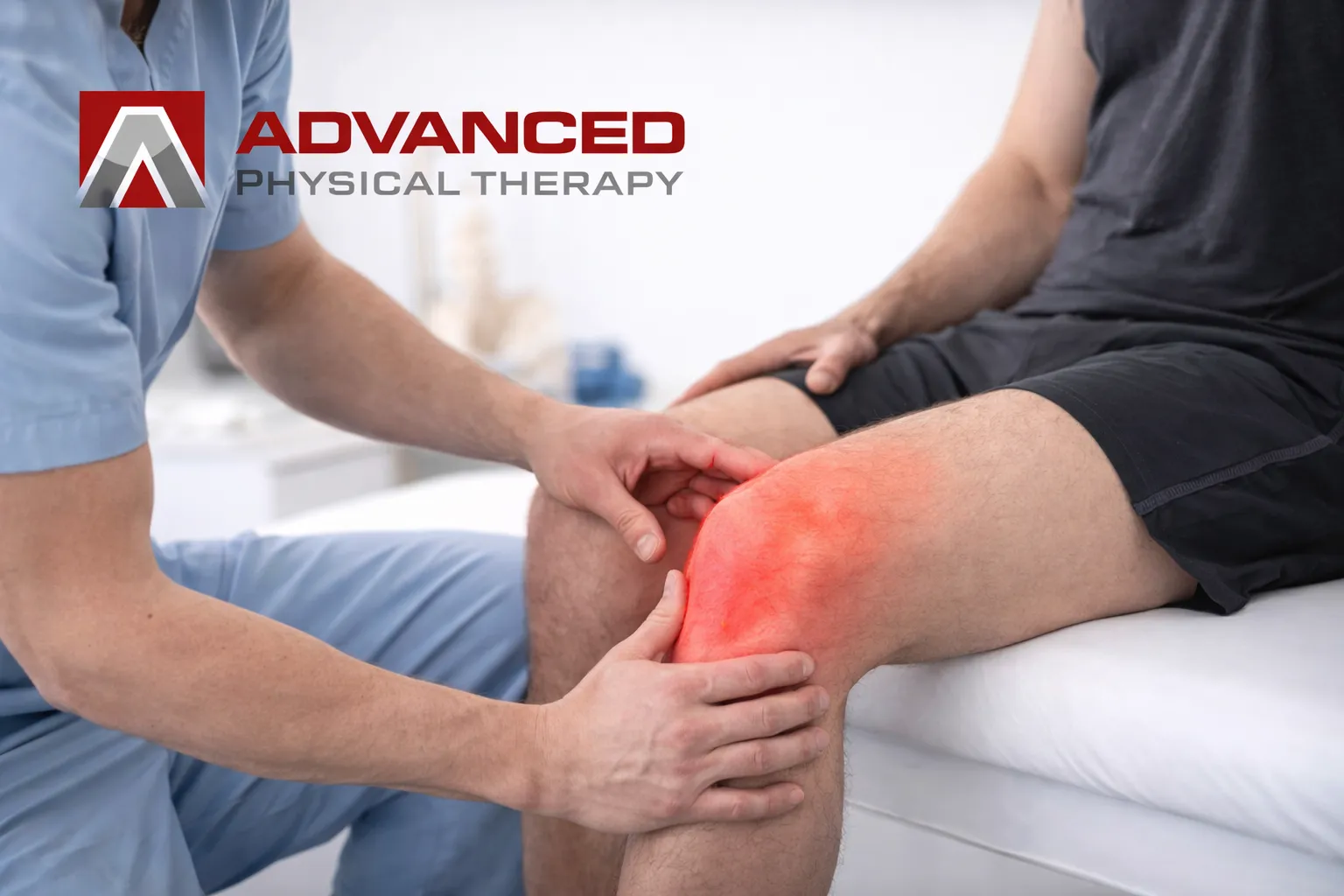
Knees tell on you. Stairs become a decision. Standing up from a low chair takes a hand on the armrest. The hike you used to do without thinking now costs you two days. And when you ask about it, the answer is often that it is just wear and tear and you should expect it at your age.
That is not the whole story. Most knee pain responds to the right loading plan, and a lot of people who were told surgery was the only option never got a proper movement examination first. At our Bentonville clinic you get a full hour one-on-one with a licensed physical therapist who tests the joint properly and tells you what is actually driving the pain.
Why Your Knee Hurts, and Why It Is Often Not the Knee
The knee is a hinge caught between two joints that rotate. When a hip is weak, an ankle is stiff, or spinal mechanics above it are off, the knee absorbs motion it was never built to handle. Cartilage and bone take uneven load, the joint produces extra fluid, and inflammation sets in. The pain shows up at the knee because that is where the damage is landing, but the cause is frequently above or below it.
Cartilage is also slow to repair. It has very little blood supply, so the cells that would normally drive healing barely reach it. That is not a reason to give up on the joint. It is the reason the plan has to be about offloading the damaged surface through strength rather than waiting for the surface itself to grow back.
This is why a physical examination matters more than an image here. Scans of healthy knees routinely show changes that cause no symptoms at all. What predicts how you feel is strength, range of motion, and how the whole leg works as a unit. For background on the common knee conditions and how they are diagnosed, MedlinePlus is a reliable starting point.
Knee Conditions We Treat in Bentonville, AR
- Osteoarthritis and age-related joint wear
- Meniscus tears and cartilage damage
- Patellar pain, runner’s knee, and pain on stairs or hills
- ACL, MCL, and other ligament injuries
- Tendon pain and overuse knee injuries
- Swelling and stiffness that will not settle
- Recovery after knee surgery or total knee replacement
- Knees that buckle, catch, or feel unreliable
If arthritic change is the main driver, our dedicated arthritis therapy program goes deeper on managing a joint disease long-term.
How We Treat Knee Pain
The goal is a knee that tolerates load again, not a knee that has simply been rested. Rest reduces pain and also reduces the strength you need, which is why pain so often returns the moment you go back to normal life.
Your plan combines hands-on joint and soft tissue work to restore range of motion, targeted strengthening for the quadriceps, glutes, and calf, and a graded return to the activity you actually want back. We also correct how you squat, bend, climb, and land, because technique is what keeps the gains. Where swelling or stiffness is limiting progress, we use positioning, soft tissue massage, and controlled motion to move it along before loading harder.
The exercise prescription is the part that gets taken least seriously and matters most. Each one is tailored to what your exam showed, performed at an intensity you can handle safely, and advanced on a schedule. We measure your strength and motion as we go, so the progression is based on what changed rather than on how many weeks have passed. Stretching exercises have a place, but they are support work, not the treatment itself.
Antiinflammatory medicine has a role early on, and so does ice, but neither builds anything. We also look below the knee, because a stiff ankle or a heel that strikes the ground wrong sends the load straight up into the joint you are trying to protect.
These are the same orthopedic principles used to treat knee injuries in athletes, applied to a wide range of everyday knees. Explore the broader approach to treating knee pain for more on what each stage involves.
Before and After Knee Surgery
Two things change outcomes and both get skipped. Strengthening the leg before an operation makes the early weeks afterward dramatically easier. And the first six weeks after surgery set your long-term range of motion, so there is no catching up later if you lose it.
We handle both ends. If a replacement is already scheduled, our rehabilitation after joint surgery follows your surgeon’s protocol while keeping the rest of your body working. If surgery is still a question mark, several months of honest strengthening is a fair test of whether you need it.
Staying Steady on Your Feet
A painful knee changes how you walk, and over time that costs you confidence as well as mobility. People start shortening their stride, avoiding uneven ground, and holding the rail. If that is where you are, balance and fall prevention training runs alongside knee treatment to help you prevent a fall rather than react to one. Better coordination and a leg you can trust to assist you on stairs is a quality of life change, not a small one.
Chronic knee pain also quietly reshapes your lifestyle. The walk gets dropped, then the garden, then the stairs at a friend’s house. Getting those back is usually the real goal, and it is what we build the plan around. Feeling better at rest is the halfway point.
Frequently Asked Questions
Is physical therapy worth it for knee pain?
For most knee pain, yes, and it is usually the right first step. Strengthening the muscles around the joint reduces the load going through damaged tissue, which lowers pain without medication. It also tells you something useful: if a well-run plan does not help, that is real information for deciding about surgery.
What physical therapy is good for knee pain?
Progressive strengthening is the core of it, built around what your exam shows is weak. That gets paired with hands-on work to restore motion, stretching for whatever is limiting the joint, and retraining the movements that hurt. Generic quad sets alone rarely do much.
How long does physical therapy take to work for knee pain?
Most patients notice a change in two to three weeks and see meaningful gains by six to eight. Strength takes longer than pain relief, so the plan continues past the point where you feel better. We give you an expected visit count after the evaluation.
Does physical therapy work for knee arthritis?
Yes. It does not reverse the arthritis, but it changes how much that arthritis bothers you. Stronger muscles absorb force the joint would otherwise take, and better motion reduces stiffness. Many patients delay or avoid a replacement this way.
Do I need a referral, and will my plan cover it?
Most patients in Arkansas can start PT without a physician referral. Knee rehabilitation is covered by insurance under most plans. Call us with your details, we will verify exactly what your plan covers and what you would owe, and we will discuss it with you before you commit to anything.
Get Your Knee Evaluated in Bentonville
Stairs, hikes, and getting off the floor should not be the hard part of your day. Call (479) 268-5757 for an evaluation and we will tell you straight whether physical therapy can fix this.
Looking for physical therapy in Bentonville AR for a knee that has been bothering you for months? That is most of what we do. One location, on North Walton Blvd, treating patients from across the Ozarks.
Advanced Physical Therapy
1206 North Walton Blvd, Suite 4
Bentonville, AR 72712
Phone: (479) 268-5757