
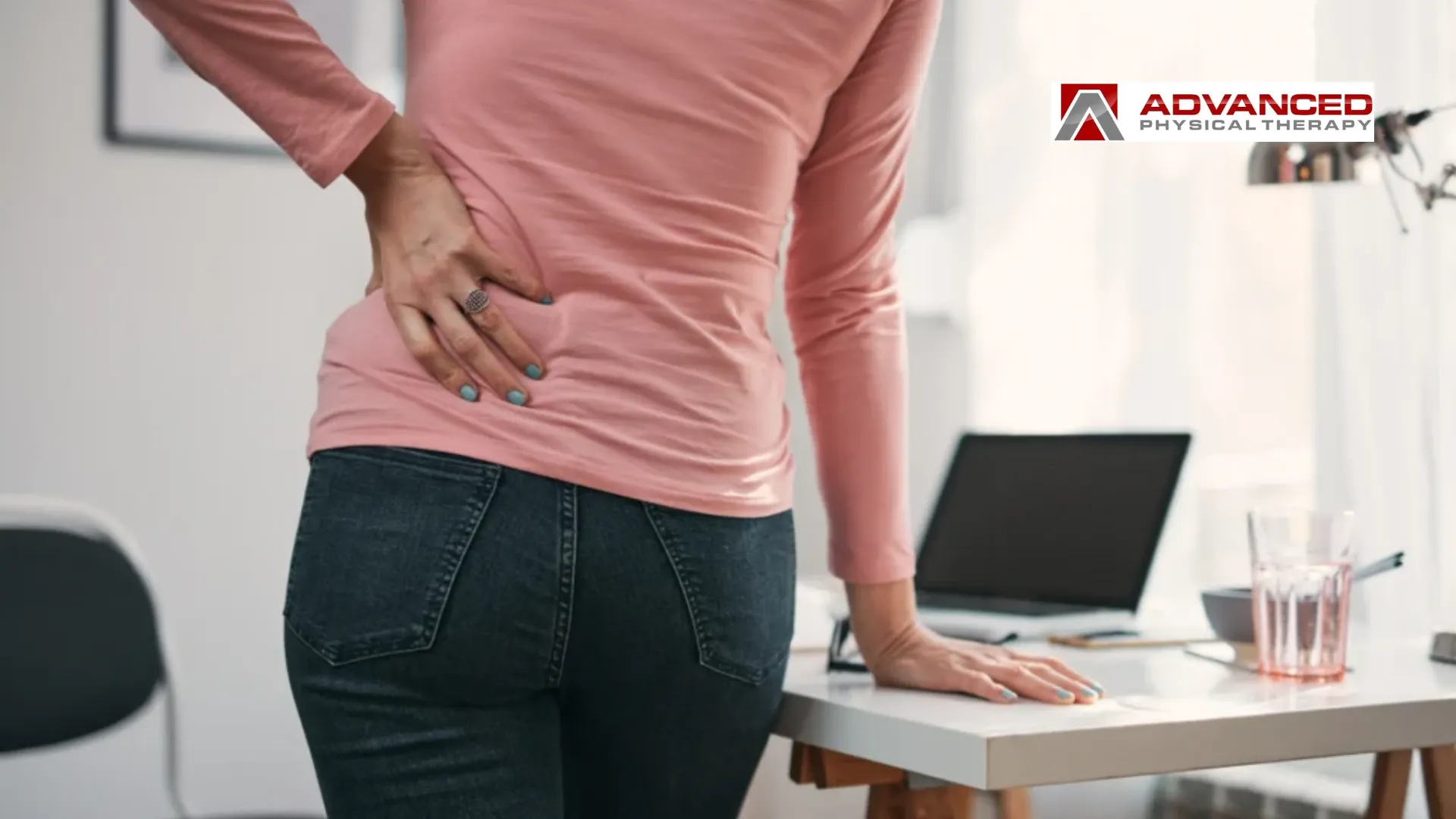
Pain lasting more than a few weeks behaves differently from pain that started yesterday, and back pain physical therapy in Downtown Rogers treats the two on separate tracks. A therapist first classifies the pain by duration, symptom pattern, and what movements provoke it, then matches treatment to that classification.
Downtown Rogers covers the historic district around First and Walnut Streets, where century-old buildings house restaurants, shops, and small trade businesses. Classification drives the plan, so evaluation comes before treatment.
What Is Back Pain Physical Therapy in Downtown Rogers?
Back pain physical therapy in Downtown Rogers is clinic-based treatment for spinal pain that has not responded to rest or medication. The therapist identifies which tissues and movements reproduce symptoms, applies hands-on treatment to reduce the pain, and teaches the patient how to control it. Care ends when the patient manages the condition independently.
Key Facts About Back Pain Physical Therapy in Downtown Rogers
- Acute back pain lasts less than six weeks.
- Chronic back pain persists beyond twelve weeks.
- Imaging rarely changes treatment for uncomplicated back pain.
- Disc-related pain often centralizes toward the spine as treatment progresses.
- Weak hip muscles increase load on the lumbar spine.
- Fear of movement predicts slower recovery than the injury itself does.
- Physical therapists screen for conditions that require physician referral.
- Home exercise compliance correlates with lower recurrence rates.
How Do Therapists Classify Back Pain?
Classification decides everything that follows. Two patients with pain in the same location can need opposite treatments.
Acute Mechanical Pain
Recent strain of muscle or ligament, usually traced to a lift, twist, or fall. The pain is sharp with movement and quieter at rest. Treatment restores motion early and returns most patients to normal activity within days.
Nerve-Related Pain
Symptoms travel below the knee, sometimes with numbness or weakness. Treatment uses directional exercise and nerve mobility work, and progress shows up as symptoms retreating back toward the spine.
Chronic Persistent Pain
Pain outlasts the healing time of the injured tissue. The nervous system stays sensitized to ordinary movement, so treatment combines graded exercise, activity pacing, and education about how pain signals work.
Why Does Downtown Rogers See These Injuries?
The downtown workforce is hands-on. Restaurant staff carry trays and bus tubs through long standing shifts, shop owners unload stock several times a week, and contractors renovating the district’s brick buildings spend full days overhead or bent forward. Each pattern loads the lumbar spine unevenly and repeats daily.
Housing adds a second factor. Many downtown homes predate 1960 and bring steep staircases, low basements, and heavy seasonal yard work. Residents who ride the Railyard Bike Park trails or walk the Frisco Trail after sedentary workdays absorb a third pattern, driven by the sudden swing in load rather than by any single event.
How Does Treatment Reduce Pain?
Manual therapy restores motion at stiff spinal segments and unloads the sensitive ones. Exercise then rebuilds the hip and trunk endurance that holds the correction in place, and education teaches which positions calm symptoms and which provoke them.
Federal activity recommendations describe how regular movement lowers pain levels in people living with chronic conditions, and back pain rehabilitation applies that principle in measured doses.
What Does the Treatment Plan Look Like?
Plan length follows the classification:
- Acute cases: two visits per week for three to four weeks, weighted toward manual therapy and early motion.
- Nerve-related cases: four to eight weeks, with daily home repetitions of a directional exercise.
- Chronic cases: ten to twelve weeks, shifting from hands-on care toward loading tolerance and pacing.
Every plan sets measurable goals tied to daily tasks rather than to pain scores alone.
When Should Someone Start Treatment?
Evaluation makes sense when pain has not improved after two weeks of self-care, when symptoms spread into the buttock or leg, when pain wakes the patient at night, or when episodes return several times a year. Immediate medical attention applies to bowel or bladder changes, progressive leg weakness, fever with back pain, or pain following a significant fall.
Questions Patients Ask About Back Pain Care
Is an MRI needed before physical therapy?
Most patients begin without imaging. Findings such as disc bulges appear in people without symptoms, so the physical examination guides treatment more reliably than scans.
Will the pain come back after discharge?
Recurrence is common in untreated cases and less common when patients keep up the strengthening program. The plan includes maintenance exercises for that reason.
Can chronic back pain improve after years of symptoms?
Long-standing pain responds to graded loading and education, though progress is measured over months. Function usually improves before pain intensity drops.
How is a first visit structured?
The visit lasts about an hour and covers history, movement testing, neurological screening, initial treatment, and a short home program.
Which Areas Does the Rogers Clinic Reach?
Advanced Physical Therapy accepts patients across northern Benton County:
- Downtown Rogers (72756)
- Pinnacle Hills
- Prairie Creek
- Avoca
- Lowell
- Bentonville
- Garfield
The Rogers clinic operates at 2100 W. Hudson Rd., Suite 3, roughly ten minutes west of the historic downtown district.
Choosing a Starting Point
Pain that keeps returning tends to widen its effect on sleep, work, and mood, and treatment gets simpler when it starts early. Residents researching back pain physical therapy in Downtown Rogers can see the Rogers clinic team, hours, and location before deciding. Our front desk answers questions about insurance and scheduling at (479) 340-1100.